LDR 615 Benchmark – Contemporary Organization Evaluation

LDR 615 Benchmark – Contemporary Organization Evaluation – Step-by-Step Guide With Example Solution
The first step before starting to write the LDR 615 Benchmark – Contemporary Organization Evaluation is to understand the requirements of the assignment. The first step is to read the assignment prompt carefully to identify the topic, the length, and the format requirements. You should go through the rubric provided so that you can understand what is needed to score the maximum points for each part of the assignment.
It is also important to identify the paper’s audience and purpose, as this will help you determine the tone and style to use throughout. You can then create a timeline to help you complete each stage of the paper, such as conducting research, writing, and revising, to avoid last-minute stress before the deadline. After identifying the formatting style to be applied to the paper, such as APA, review its use, including how to write citations and reference the resources used. You should also review the formatting requirements for the title page and the paper’s headings, as outlined by GCU.
How to Research and Prepare for LDR 615 Benchmark – Contemporary Organization Evaluation
The next step in preparing for your paper is to conduct research and identify the best sources to use to support your arguments. Identify a list of keywords related to your topic using various combinations. The first step is to visit the GCU University library and search its database using key keywords related to your topic. You can also find books, peer-reviewed articles, and credible sources for your topic from the GCU University Library, PubMed, JSTOR, ScienceDirect, SpringerLink, and Google Scholar. Ensure you select references published in the last 5 years and review each to assess credibility. Ensure that you obtain the references in the required format, such as APA, so that you can save time when creating the final reference list.
You can also group the references by themes that align with the paper’s outline. Go through each reference and summarize the key concepts, arguments, and findings for each source. You can write down your reflections on how each reference connects to the topic you are researching. After the above steps, you can develop a strong, clear, concise, and arguable thesis. Next, create a detailed outline to help you develop the paper’s headings and subheadings. Ensure that you plan what point will go into each paragraph.
How to Write the Introduction for LDR 615 Benchmark – Contemporary Organization Evaluation
The introduction of the paper is the most crucial part, as it helps provide the context of your work and determines whether the reader will be interested in reading through to the end. Begin with a hook to capture the reader’s attention. You should contextualize the topic by offering the reader a concise overview of the topic you are writing about so that they may understand its importance. You should state what you aim to achieve with the paper. The last part of the introduction should be your thesis statement, which provides the main argument of the paper.
How to Write the Body for LDR 615 Benchmark – Contemporary Organization Evaluation
The body of the paper helps you to present your arguments and evidence to support your claims. You can use headings and subheadings developed in the paper’s outline to guide you on how to organize the body. Start each paragraph with a topic sentence to help the reader know what point you will be discussing in that paragraph. Support your claims using the evidence collected from the research, and ensure that you cite each source properly using in-text citations. You should analyze the evidence presented and explain its significance, as well as how it relates to the thesis statement. You should maintain a logical flow between paragraphs by using transition words and a flow of ideas.
How to Write the In-text Citations for LDR 615 Benchmark – Contemporary Organization Evaluation
In-text citations help readers give credit to the authors of the references they have used in their work. All ideas borrowed from references, any statistics, and direct quotes must be properly referenced. The name and date of publication of the paper should be included when writing an in-text citation. For example, in APA, after stating the information, you can put an in-text citation at the end of the sentence, such as (Smith, 2021). If you are quoting directly from a source, include the page number in the citation, for example (Smith, 2021, p. 15). Remember also to include a corresponding reference list at the end of your paper that provides full details of each source cited in your text. An example paragraph highlighting the use of in-text citations is as follows:
“The integration of technology in nursing practice has significantly transformed patient care and improved health outcomes. According to Morelli et al. (2024), the use of electronic health records (EHRs) has streamlined communication among healthcare providers, allowing for more coordinated and efficient care delivery. Furthermore, Alawiye (2024) highlights that telehealth services have expanded access to care, particularly for patients in rural areas, thereby reducing barriers to treatment.”
How to Write the Conclusion for LDR 615 Benchmark – Contemporary Organization Evaluation
When writing the conclusion of the paper, start by restating your thesis to remind the reader what your paper is about. Summarize the paper’s key points by restating them. Discuss the implications of your findings and your arguments. Conclude with a call to action that leaves a lasting impression on the reader or offers recommendations.
How to Format the Reference List for LDR 615 Benchmark – Contemporary Organization Evaluation
The reference helps provide the reader with the complete details of the sources you cited in the paper. The reference list should start with the title “References” on a new page. It should be aligned center and bolded. The references should be organized in alphabetical order, with each entry indented. If a source has no author, it should be alphabetized by the title of the work, ignoring any initial articles such as “A,” “An,” or “The.” If you have multiple works by the same author, list them in chronological order, starting with the earliest publication.
Each reference entry should include specific elements depending on the type of source. For books, include the author’s last name, first initial, publication year in parentheses, the title of the book in italics, the edition (if applicable), and the publisher’s name. For journal articles, include the author’s last name, first initial, publication year in parentheses, the title of the article (not italicized), the title of the journal in italics, the volume number in italics, the issue number in parentheses (if applicable), and the page range of the article. For online sources, include the DOI (Digital Object Identifier) or the URL at the end of the reference. An example reference list is as follows:
References
Morelli, S., Daniele, C., D’Avenio, G., Grigioni, M., & Giansanti, D. (2024). Optimizing telehealth: Leveraging Key Performance Indicators for enhanced telehealth and digital healthcare outcomes (Telemechron Study). Healthcare, 12(13), 1319. https://doi.org/10.3390/healthcare12131319
Alawiye, T. (2024). The impact of digital technology on healthcare delivery and patient outcomes. E-Health Telecommunication Systems and Networks, 13, 13-22. 10.4236/etsn.2024.132002.
LDR 615 Benchmark – Contemporary Organization Evaluation Instructions
In today’s fast-paced and global community, most organizations are faced with constant change. Using the contemporary organization, from the Change Management Simulation in Class Resources, that is responding to a significant change within the industry, capture the critical mass of stakeholders necessary to support and implement the change within the specified time frame. Have a look at LDR 615 Topic 3 DQ 1 Identify and discuss common external and internal drivers of change within your industry.
Assume the role of a stakeholder with high authority and low urgency.
Evaluate the simulation to answer the following questions in a paper (1,250-1,500 words) discussing how well the organization is responding to the change dynamics. Include the following:
Describe the organization and the change to which it is responding. Identify the major stakeholders of the organization and provide insight to the organization’s viability.
Analyze the degree to which the change has been disruptive and how the organization has responded to the dynamics created by this change.
Evaluate the strategies the organization used in its change plan, and determine the level of success the organization experienced with the strategies.
Determine the effect the change had on stakeholders. Evaluate to what degree stakeholders resisted and how well stakeholder resistance was addressed.
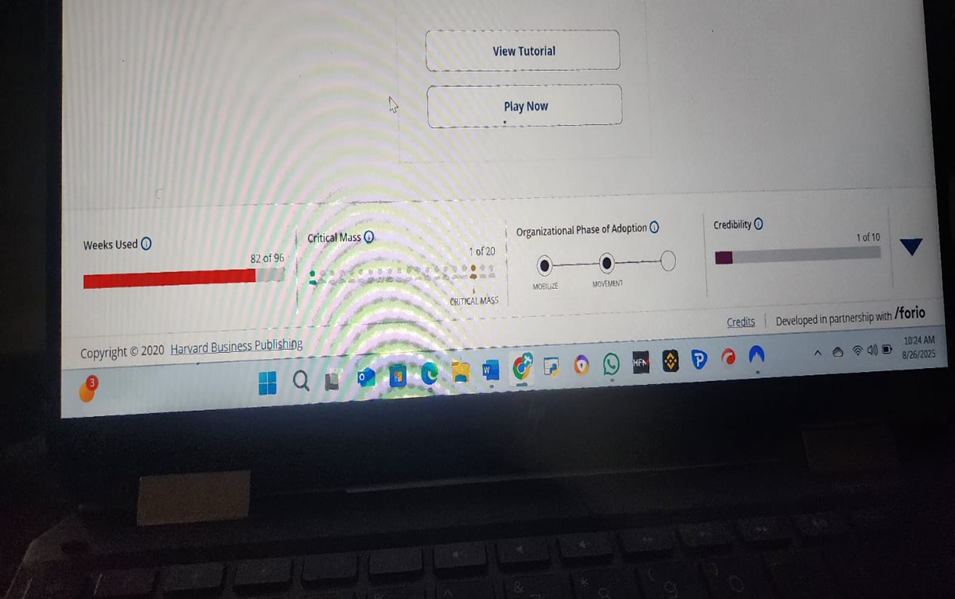
Include a screenshot from the simulation to show the critical mass captured and the time frame it took to accomplish. Analyze the overall implications the change had on interdepartmental collaboration.
In your opinion, how well did the various leaders of the organization respond and prepare for the change? Analyze the effectiveness of what worked and what did not work with the strategies they implemented.
What modifications or additional strategies would you suggest the selected leaders of the organization make in order to better address the change dynamics?
Prepare this assignment according to the guidelines found in the APA Style Guide, located in the Student Success Center.
This assignment uses a rubric. Please review the rubric prior to beginning the assignment to become familiar with the expectations for successful completion.
You are required to submit this assignment to LopesWrite. A link to the LopesWrite technical support articles is located in Class Resources if you need assistance.
Benchmark Information
This benchmark assignment assesses the following programmatic competencies:
MSL, MSL Homeland Security and Emergency Management 3.1; MSN Leadership in Health Care Systems, MBA-MSL, MSN-MBA Nursing Leadership in Health Care Systems 6.1
Analyze organizational behavior to determine systemic interdependencies among individuals, teams, and departments.
LDR 615 Benchmark – Contemporary Organization Evaluation Example
Benchmark – Contemporary Organization Evaluation
The pace of change in healthcare is relentless, shaped by new technologies, evidence-based practices, patient expectations, and shifting policy landscapes. According to Burrell (2024), organizations that thrive in this environment are those able to implement change initiatives effectively while maintaining high-quality care delivery. Within oncology care, one of the most pressing issues is cancer-related fatigue (CRF), a debilitating symptom that affects the physical, psychological, and social well-being of patients undergoing chemotherapy.
Evidence increasingly demonstrates that structured exercise programs led by nurses can reduce the severity of CRF and improve patients’ quality of life (Strasser, 2021). For a healthcare system committed to advancing patient-centered care, the introduction of such programs represents not only a clinical innovation but also a significant organizational change. This paper evaluates how a contemporary healthcare organization responds to this change initiative, explores the organization’s stakeholders, the level of disruption created by the change, and other factors influencing the change. It also considers lessons learned from the simulation and offers recommendations to strengthen future efforts.
Organizational Context and Change
The subject of this evaluation is a large academic medical center in New York, widely recognized for its comprehensive cancer institute. Its reputation and long-term viability are supported by clinical excellence and continuous adoption of evidence-based innovations. Financially stable yet operating under the everyday pressures of modern healthcare, the institution must strike a balance between cost control and optimal outcomes. The current change initiative involves implementing a standardized, nurse-led, structured exercise program for patients with cancer-related fatigue during chemotherapy. Far more than promoting activity, this clinical innovation requires new protocols, specialized nurse training, dedicated space and equipment, electronic health record integration, and outcome-tracking metrics. The initiative’s scope extends across nearly all dimensions of the oncology service line, reshaping patient care, professional practice, and organizational infrastructure.
The stakeholder ecosystem for this initiative is highly complex, with each group bringing distinct motivations and concerns. Key internal figures include the Chief Nursing Officer (CNO), whose executive sponsorship ensures strategic support and political cover. The Oncology Nurse Manager carries primary operational responsibility, handling scheduling, competency validation, and day-to-day execution. The Medical Director of Oncology holds a critical influence, as their endorsement is essential for physician engagement and patient referrals. The Director of Rehabilitation Services provides essential collaboration, requiring early role definition to avoid conflict. The Chief Financial Officer (CFO) demands a persuasive value case to justify resource allocation. Ultimately, program success rests on frontline nurses and patients, while external payors determine sustainability through reimbursement policies that influence long-term viability (Chapman et al., 2022).
Disruption and Organizational Response
The introduction of this nurse-led program represented a moderately disruptive change, challenging established workflows and clinical paradigms. Kuderer et al. (2022) note that cancer-related fatigue has traditionally been managed with pharmacological treatment and rest recommendations. Prescribing structured exercise to profoundly fatigued patients marked a significant cognitive and practical shift, prompting skepticism among clinicians and patients alike. Nurses faced expanded responsibilities, including new competencies and concerns over workload. Physicians had to reconcile this intervention with established regimens while trusting nursing-led protocols. Patients, meanwhile, questioned both the safety and feasibility of exercise during chemotherapy, reflecting widespread uncertainty at implementation.
The organization responded to disruption with a deliberate, phased strategy rather than a sweeping mandate. A controlled pilot in one oncology unit enabled process refinement, the identification of challenges, and the generation of local evidence to counter skepticism. Simulation levers reinforced this approach. An “Issue email notice” was introduced organization-wide, framing the initiative within the mission of innovation and patient-centered care. To close knowledge gaps, leaders prioritized “Provide internal skill-building” sessions, enhancing nursing capacity and confidence. The most impactful lever, “Conduct pilot project,” produced compelling proof-of-concept outcomes. Finally, leadership “Walk the talk,” visibly championing the program, which fostered trust and credibility.
Strategies and Their Effectiveness
The organization’s change plan was multifaceted, employing several strategies from the simulation toolkit with varying success. “Private interviews” and informal conversations led by the Nurse Manager proved critical, uncovering staff concerns about workload and competency that could be addressed personally rather than abstractly. “Hold town hall meetings” created transparent forums for two-way dialogue, clarifying the vision while addressing physician reservations about evidence and logistics. The “Pilot project” emerged as the most pivotal strategy, generating local proof of safety and efficacy that anchored future communication. This evidence was then amplified through the “Tell a ‘success’ story” lever, reinforcing credibility and momentum.
Organizational storytelling, highlighting individual patient improvements, effectively shifted cultural norms and engaged staff still in the awareness and interest stages by making change human and relatable. Complementing this, “Post progress reports” served as visible cultural artifacts, reinforcing momentum, celebrating milestones, and making progress tangible. A mixed-methods evaluation demonstrated success. Quantitatively, the pilot unit exceeded enrollment targets and showed statistically significant improvements in fatigue and quality-of-life scores at twelve weeks. Qualitatively, surveys and focus groups revealed stronger nursing buy-in, enhanced skills, and greater satisfaction. Achieving critical mass within the projected timeframe confirmed that the sequencing of levers built sustainable support.
Stakeholder Impact and Resistance
The change produced varied impacts across stakeholders. Patients reported reduced fatigue and greater control over their recovery, while nurses, after initial trepidation, found enriched roles and a more profound impact on outcomes, which enhanced their motivation. Physicians shifted from skepticism to cautious support as pilot data addressed concerns about safety and efficacy. The CFO’s office remained cautious, acknowledging value but requiring longer-term financial evidence. Resistance, expected and managed, arose from senior nurses who were comfortable with established models and physicians who were protective of their autonomy. Leaders used “Private interviews” to surface concerns and invited skeptics to co-review safety protocols and pilot data, converting opposition into advocacy and building a genuine coalition.
Critical Mass and Collaboration
The simulation confirmed that critical mass was successfully achieved within the designated timeframe. As depicted in Figure 1, adoption surpassed the 75% threshold by Week 12, marking the tipping point toward irreversible momentum. A crucial factor was the transition of nurse managers and lead oncologists from cautious observers to active advocates between Weeks 8 and 10, which significantly influenced peers and accelerated support across stakeholder groups. Several carefully sequenced strategies contributed to this outcome.
The 4-week pilot project, launched in Week 2, allowed staff to observe the program in a safe and controlled setting, thereby reducing uncertainty and building trust. Recognition of early adopters in Week 6 demonstrated organizational endorsement and inspired others. Consistent communication, including organizational emails (Week 1), bi-weekly progress reports (starting Week 4), and a town hall meeting (Week 5), reinforced transparency. Internal skill-building sessions (Weeks 3–4) equipped nurses with essential competencies. By Week 12, collaboration among nursing, oncology, rehabilitation, and patient education was integrated into daily practice, reflecting cultural change, shared ownership, and confidence in the program’s success.
Leadership Evaluation
The leadership response was generally effective, but it also revealed areas for growth. The CNO provided essential visionary leadership and secured political and financial cover for the pilot. The Oncology Nurse Manager demonstrated strong operational preparation through detailed planning and competency validation. However, the initial communication strategy was a misstep; a broad announcement caused undue anxiety before individual concerns could be addressed. The most effective leadership action was empowering “Clinical Champions” among the early-adopting nurses, creating a distributed leadership model that generated authentic, peer-to-peer influence. A less effective strategy was underestimating the financial and bureaucratic hurdles, which required a mid-course correction and engagement with the CFO.
Recommendations for Improvement
Several modifications could further strengthen the program’s implementation. Expanding the role of nurse change champions across all oncology units would accelerate adoption and provide continuous peer support. Greater engagement of patients’ families and caregivers could reinforce adherence and create stronger support networks. Developing robust outcome-tracking systems, including fatigue severity scores and quality-of-life metrics, would help sustain institutional commitment and secure external support. Allocating dedicated resources for training, equipment, and patient monitoring would prevent implementation delays, while establishing regular feedback forums would ensure that concerns are addressed in real time.
Conclusion
The implementation of the nurse-led exercise program successfully transformed cancer fatigue management. This initiative, though initially disruptive, was adopted through strategic change management, achieving critical mass and improving patient outcomes. The process empowered nursing staff, strengthened interdisciplinary collaboration, and embedded a new standard of evidence-based, patient-centered care into the organizational culture. The experience underscores that effective leadership and stakeholder engagement are paramount for navigating complex healthcare changes. These lessons in managing resistance and building coalition support provide a valuable framework for guiding future innovation and sustaining excellence in oncology care.
References
Burrell, D. N. (Ed.). (2024). Change Dynamics in Healthcare, Technological Innovations, and Complex Scenarios. (Eds) (Eds.) IGI Global.
Chapman, E. J., Martino, E. D., Edwards, Z., Black, K., Maddocks, M., & Bennett, M. I. (2022). Practice review: evidence-based and effective management of fatigue in patients with advanced cancer. Palliative Medicine, 36(1), 7–14. https://doi.org/10.1177/02692163211046754
Kuderer, N. M., Desai, A., Lustberg, M. B., & Lyman, G. H. (2022). Mitigating acute chemotherapy-associated adverse events in patients with cancer. Nature Reviews Clinical Oncology, 19(11), 681–697. https://doi.org/10.1038/s41571-022-00685-3
Strasser, F. (2021). Management of cancer-related fatigue. In Survivorship Care for Cancer Patients: A Clinician’s Handbook (pp. 203–231). Cham: Springer International Publishing. https://doi.org/10.1007/978-3-030-78648-9_11

